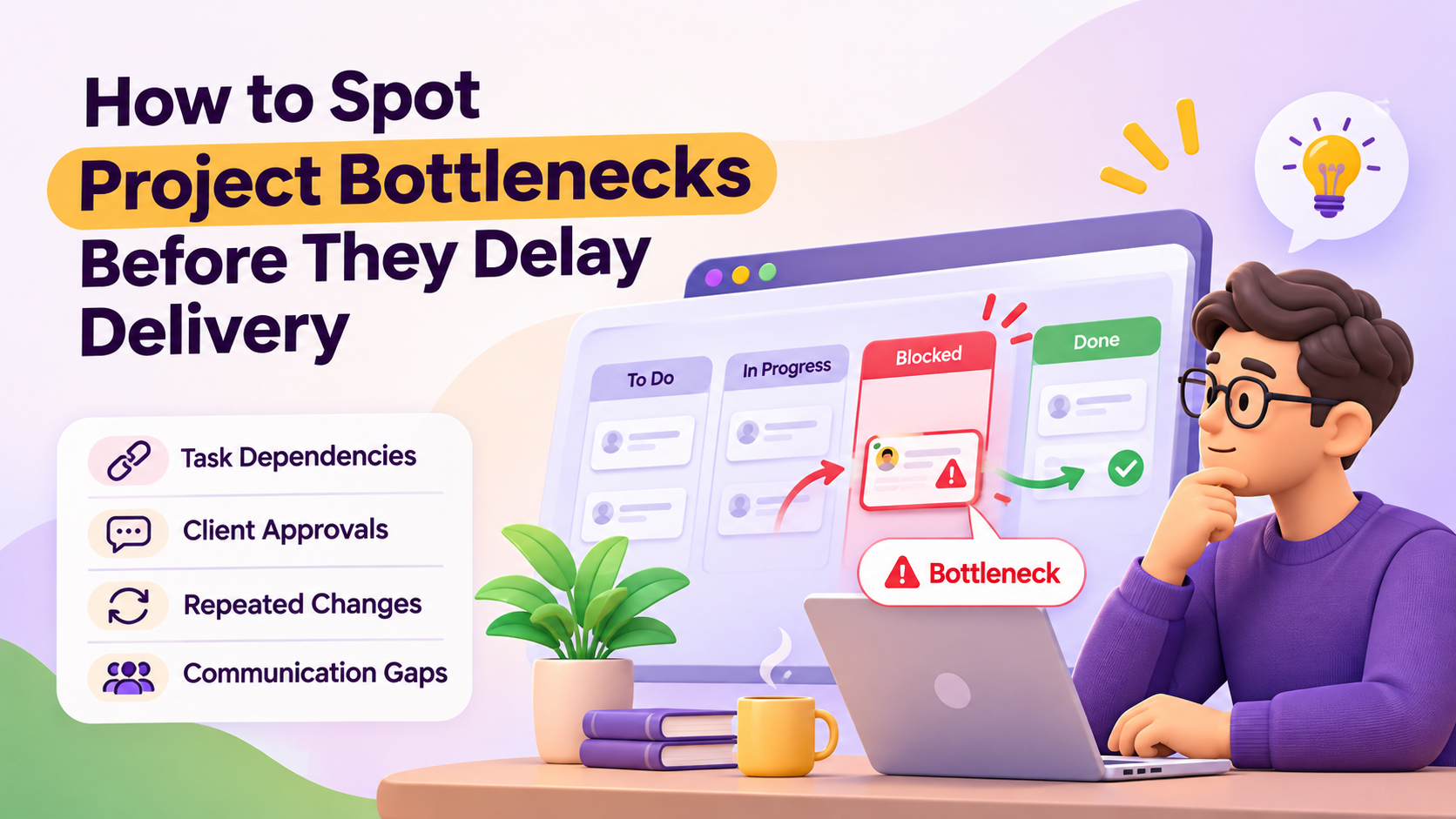
A project does not always fall behind because the team is working slowly. Sometimes, the real problem is that work gets stuck at one point.
A task may be waiting for client approval. A team member may need information from someone else. Or a small change may create extra work for several people.
These problems are called project bottlenecks. If they are not handled early, they can delay the entire project.
The good news is that managers can often spot these problems before they become serious. Here are some practical ways to find and remove project bottlenecks.
1. Find Out Where Work Stops Moving
Start by looking at tasks that have not moved forward.
A task may look simple, but it can stay unfinished for several days because someone is waiting for an answer, a file, or a decision.
For example, a designer may be ready to finish a page but cannot continue until the client provides the final content.
Instead of asking only whether a task is complete, ask what is stopping it from moving forward.
This helps managers find the real problem instead of assuming that the person responsible is working slowly.
2. Check Which Tasks Depend on Other Tasks
Some tasks cannot start until another task is finished.
For example:
A developer cannot start building a page until the design is ready.
A designer may need content before completing the layout.
A tester may need the finished feature before checking it.
When one task is delayed, the next tasks may also have to wait.
Managers should understand these connections when planning work. If an important task is holding up several others, it needs attention early.
3. Do Not Let Client Approvals Hold Up the Project
Waiting for client feedback is a common reason projects get delayed.
A team may finish its part of the work, but the next step cannot begin until the client reviews and approves it.
To reduce this problem:
Set a clear deadline for feedback.
Send a reminder when a response is overdue.
Explain which tasks are waiting for approval.
Keep communication in one clear place.
It is also helpful to tell clients how their response affects the delivery date. This makes the importance of timely feedback easier to understand.
4. Watch Out for Repeated Changes
Some changes are normal during a project. However, repeated changes to the same task can slow down other work.
For example, a client may request several design changes after the development work has already started. The team may need to redo completed work or adjust other tasks.
To avoid unnecessary delays:
Make sure requirements are clear before work begins.
Confirm important decisions with the client.
Keep a record of requested changes.
Explain how major changes may affect the delivery date.
A clear change process helps the team avoid doing the same work again and again.
5. Look for Missing Information
Sometimes, a task is not delayed because it is difficult. It is delayed because the person doing it does not have enough information.
A team member may be unsure about a requirement, waiting for a file, or looking for clarification from a manager.
These small problems can waste time when nobody knows that help is needed.
Managers can reduce this by making sure each task has clear instructions, useful details, and an easy way to ask questions.
6. Pay Attention to Communication Gaps
Poor communication can create delays even when everyone is doing their part.
For example, one team member may finish a task but forget to inform the next person. Another person may continue working with old information because they did not receive the latest update.
To prevent this:
Share important updates with the right people.
Make task changes clear.
Let team members ask questions when something is unclear.
Avoid keeping important project information in separate conversations.
Good communication helps everyone understand what has happened and what needs to happen next.
7. Talk to the Person Closest to the Problem
Project managers cannot always see why a task is stuck just by looking at its status.
The person doing the work often knows the real reason.
A short conversation can help managers understand whether the problem is missing information, unclear instructions, client feedback, or something else.
Instead of asking, "Why is this task late?" try asking:
What is stopping you from moving forward?
Do you need anything from someone else?
Is there a decision that needs to be made?
What would help you finish this task?
These questions make it easier to find a solution without blaming anyone.
8. Use Task Comments to Keep Problems Visible
When project discussions happen in different places, important details can easily get lost.
Keeping questions and updates close to the related task makes it easier for everyone to follow the conversation.
With ZMorning, team members can use the Comments panel on the Task Details page to ask questions, share updates, explain delays, and discuss task-related issues.
Managers and team members can review the conversation in the context of the task instead of searching through unrelated messages.
This does not automatically detect project bottlenecks, but it can help teams communicate about problems and keep useful information together.
9. Fix Small Blockers Before They Affect Other Tasks
Once a bottleneck is identified, the next step is to remove it.
The right solution depends on the problem.
If a task is waiting for approval, follow up with the person responsible.
If instructions are unclear, provide the missing details.
If another task is blocking progress, discuss what needs to happen first.
If a team member needs help, arrange support.
If requirements have changed, agree on the next steps and adjust the plan.
Do not wait until the final deadline to deal with these problems. A small delay is often easier to fix when it is noticed early.
Common Signs of Project Bottlenecks
Here are some signs managers should watch for:
The same task stays unfinished for several days.
Team members keep waiting for information or approval.
One unfinished task prevents other work from starting.
The same task needs repeated changes.
Team members are unsure about what to do next.
Important updates are not reaching the right people.
Not every delay is a serious problem. However, repeated signs like these deserve attention.
Final Thoughts
Project bottlenecks can happen in any team. They often start with small issues, such as a missing file, a late approval, or unclear instructions.
The key is to find out what is stopping the work and deal with it before other tasks are affected.
Managers do not need to wait for a project to fall behind before taking action. By keeping communication clear, checking blocked tasks, and helping team members when they need support, they can keep work moving and reduce avoidable delays.